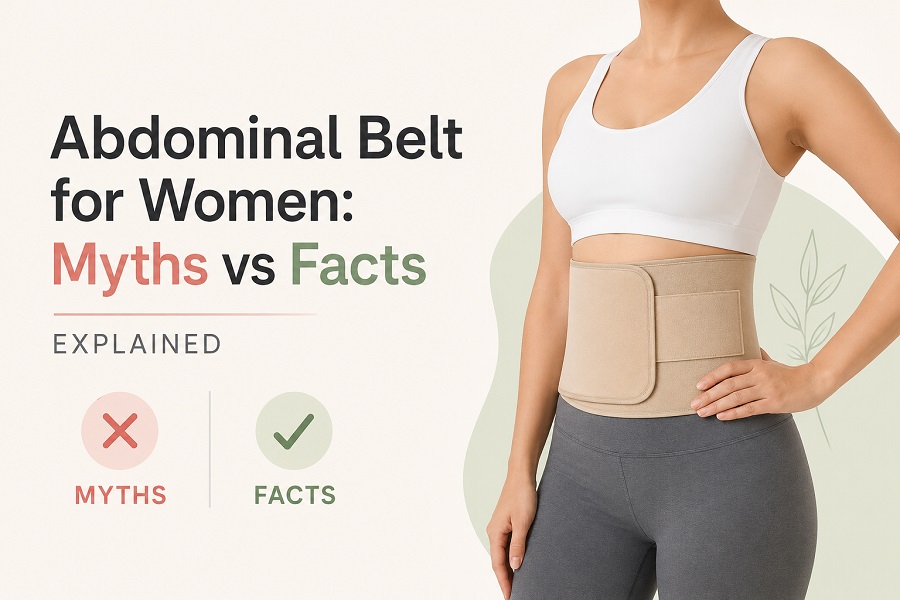
The abdominal wall consists of muscles, tendons and other connective tissues in a human body. Along with the spine and the pelvic floor, it makes up the core, which is the main structure that helps keep the torso stable, protect the organs inside, and support movement.
Women actually face a high amount of pressure to the pelvic floor in their lives: during pregnancy, delivery of a baby and in their hormonal life-time changes. Women often wear a belly belt externally over their belly. This is used for compression, support, and also to change the appearance of their belly.
If used properly these belts may provide temporary support or relieve the muscles, but most are subject to misapprehensions and sometimes a buyer believes that the belts can provide replacement muscles or will bring about any permanent changes.
This blog will discuss the common misconceptions about abdominal belts for women and present evidence-based facts that enable you to make informed decisions about your physical health.
Myth 1: The use of an abdominal belt can burn fat in your belly and lose inches.
The Fact
There are many commercial fitness belts that actually claim that wearing the abdominal support tightly during workouts or in everyday tasks makes you sweat in a specific area and permanently makes your waist smaller. Reducing fat in a specific part of the body by pressing or heating is actually not possible.
Literally while losing fat, it may help reduce weight across the whole body, not only in one specific area. This generally happens when the body uses more calories than you take in, it gets energy from fat stored throughout your entire body.
Using a tight abdomen belt around your belly can result in profuse sweating but this shrinkage is not going to last for too long. That’s a result of your body releasing water from your body during sweat. Once you drink some water your body’s cells get back to size again.
Additionally, the smooth or slimmer look achieved when wearing a belt is due to the belt compressing the surrounding soft tissue. It compresses the fat and shifts it upwards or downwards, just like a corset does. But, this actually does not change any amount of fat or muscle in your body.
Myth 2: The best way to support a weak back is to wear a belt 24 hours a day.
The Fact
Some women who have long-term lower back pain or weak core muscles may be told to wear a supportive binder all day and night to help keep their spine in the right position and lower the tiredness in their muscles. An abdominal belt after delivery for 24/7 use can make your muscles weaker and make your body rely too much on the belt. Your body actually works on the principle that if you do not use something, you lose it.
As time goes on, these muscles begin to weaken and shrink. After all, when you remove the abdominal support, the muscles supporting your spine become weaker than before. This increases the risk of injury or pain in your spine.
When and How Should a Woman Use an Abdominal Belt?
An abdominal belt can literally be helpful and effective also when used in a proper manner and in the right situations.
1. Immediate Post-Surgery Care (C-Section or Hysterectomy)
Following Caesarean, hysterectomy or large abdominal surgery, pain might occur at the abdomen. A specialized abdominal belt for women can help support the abdomen, reduce pain around the incision and make coughing, sitting up or moving around easier. During the recovery time period while the body is healing (4 to 6 weeks), this belt functions in providing both comfort and support.
2. Exercises during physical biofeedback
An elastic wrap can work great during rehab as a sensory reminder. When a woman works out, the pressure felt from the belly band helps her engage her deep core muscles and keep her spine straight. The point of the belt here is to train her nerve system, not restrict her motion.
3. Immediate Postpartum Stabilization
After several days of delivery, the hormones start to change in the woman’s body and the joints remain loose because of the hormone relaxin. Wearing a tight belt around the abdomen or pelvis can help keep loose pelvic joints in place and support stretched tissues, making it easier to move around while the body heals naturally.
Here is the Basic Difference
| Feature | Myth-Based Misuse | Evidence-Based Proper Use |
| Primary Goal | Fat loss, waist-shrinking, permanent gap closure. | Pain management, incision support, postural awareness. |
| Tightness Level | Extremely tight, restricting breath and movement. | Snug and supportive, allowing a full, deep breath. |
| Daily Duration | Worn 24/7 or for many consecutive hours. | Limit movement to certain tasks (walking, early stages of healing, etc). |
| Long-Term Effect | Muscle weakness, pelvic pressure, short of breath. | Easier early mobility, transition to independent strength. |
Conclusion
Abdominal belts are not a magic solution for women to achieve a toned body, nor are they something to be completely avoided.These are temporary support for the body, such as in instances of healing, after giving birth, after a surgery, or after going through general weakness in the body.
An abdominal belt cannot replace strong and healthy muscles. Real physical strength, a strong low back and recovering well post pregnancy all results from performing exercises in stages, proper breathing techniques and nutrition.
So if you use an abdominal binder, make it just one temporary aid to help you out, not a lifelong thing. Building on your own muscle strength should be what it’s all about.



 Several News blog
Leave a comment